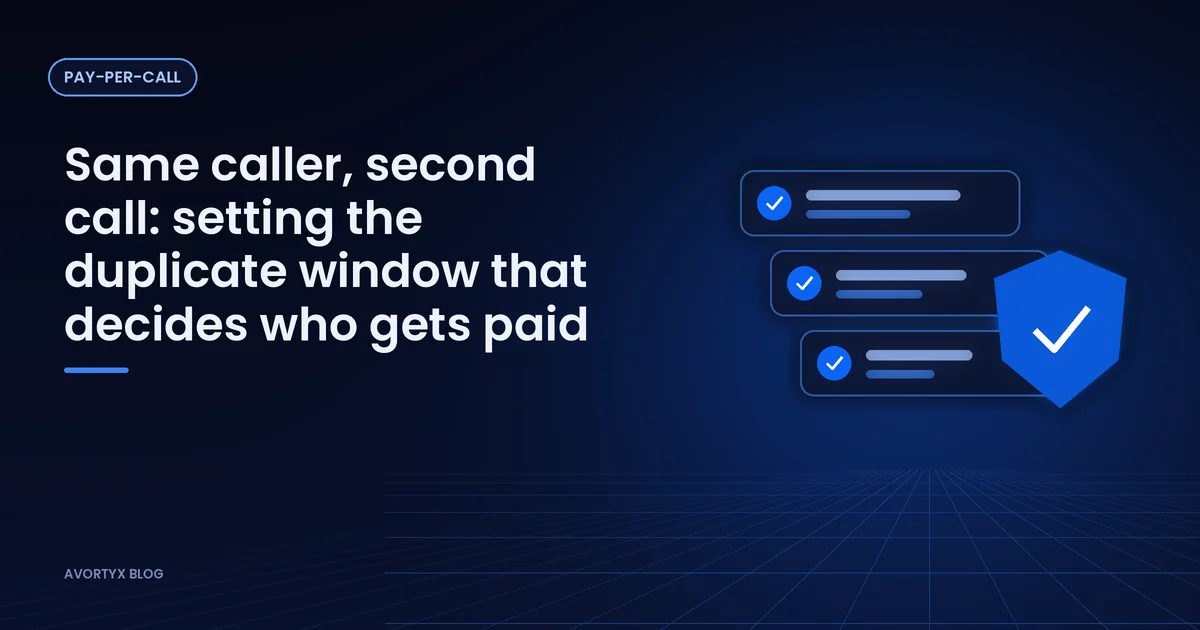
A caller rings on Monday, hangs up, and rings again on Tuesday. Is that one lead or two? In pay-per-call the answer decides who gets paid, so it is worth settling in writing before the first call arrives.
What the window does
A duplicate window is the stretch of time in which a second call from the same number counts as a repeat rather than a new lead. Inside the window the repeat is not paid for again; outside it, the caller is treated as new.
How long, and over what
Length follows the sales cycle. Quick purchases suit short windows; considered ones, where people call back to compare quotes, suit longer ones. The window also needs a scope, because a repeat to the same buyer is a different question from a repeat to the same offer.
- Same buyer, short window: a buyer never pays twice for someone calling back.
- Same offer, longer window: a source is not paid twice for one shopper.
- Whole account: the strictest view, useful in small verticals.
- Monday 10:02
- First call, routed and paid
- Tuesday 15:40
- Same number, same offer
- With a 7-day window
- A repeat, not paid again
- With a 24-hour window
- A new lead
Illustrative.
The awkward cases
Blocked and anonymous caller IDs cannot be matched, so decide up front whether they always count as new or always go to review. Shared office lines and family phones can also look like repeats; a shorter window keeps them from being shut out unfairly.
Avortyx checks every call for spam and duplicates before it routes, so a repeat is caught before a buyer’s phone rings.
See it in your own numbers. Know where each call came from, send it to a buyer who can take it, and see what it earned.