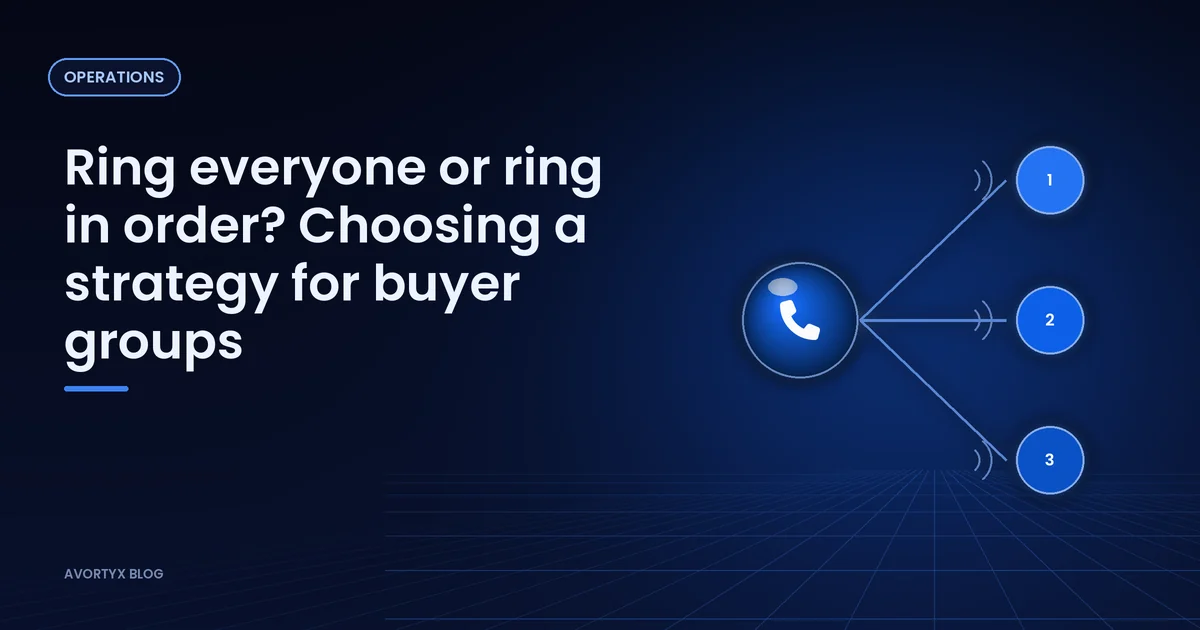
When a call could go to any of several people, the question is how to ask them. Ring them all and take whoever answers first, or try them in an order you chose?
All at once
Ringing everyone at once gets a caller to a person fastest. The caller hears fewer rings, and whoever is free picks up. It suits teams where anyone can handle any caller, such as a sales floor or agents covering one office.
The cost is fairness and focus. The same fast responder can win most calls, and people in the middle of something are interrupted by calls they will not take.
One after another
Dialing in order keeps a preference. Your first choice always gets first refusal, and the next person rings only if they do not answer. It suits partners with different priorities or skills, at the price of a longer wait when the early choices are busy.
- All at once
- Three phones ring; the second agent answers in 6s
- In order
- Agent 1 rings for 15s, no answer; agent 2 answers in 4s
- Caller waits
- 6s against 19s
- Who takes it
- The fastest against the second choice
Illustrative timings.
Mix the two
A group can sit inside a wider routing plan. Put one preferred buyer in the top tier and a ring-everyone group below it, so the best partner gets first refusal and the group catches the rest.
Avortyx buyer groups either ring every member together, with the first to answer and press 1 taking the call, or dial members one after another. A group competes in routing next to individual buyers, with its own tier and weights.
See it in your own numbers. Know where each call came from, send it to a buyer who can take it, and see what it earned.